Professor Angeliki Ziaka of the World Council of Churches on the importance of local relationships in challenging polarization, strengthening democracy and building peace.
At a time of growing polarization and tensions between religious communities, dialogue can play a vital role in strengthening mutual understanding, democracy and peace. But what does meaningful interreligious dialogue look like in practice, and how can local relationships contribute to more resilient societies?
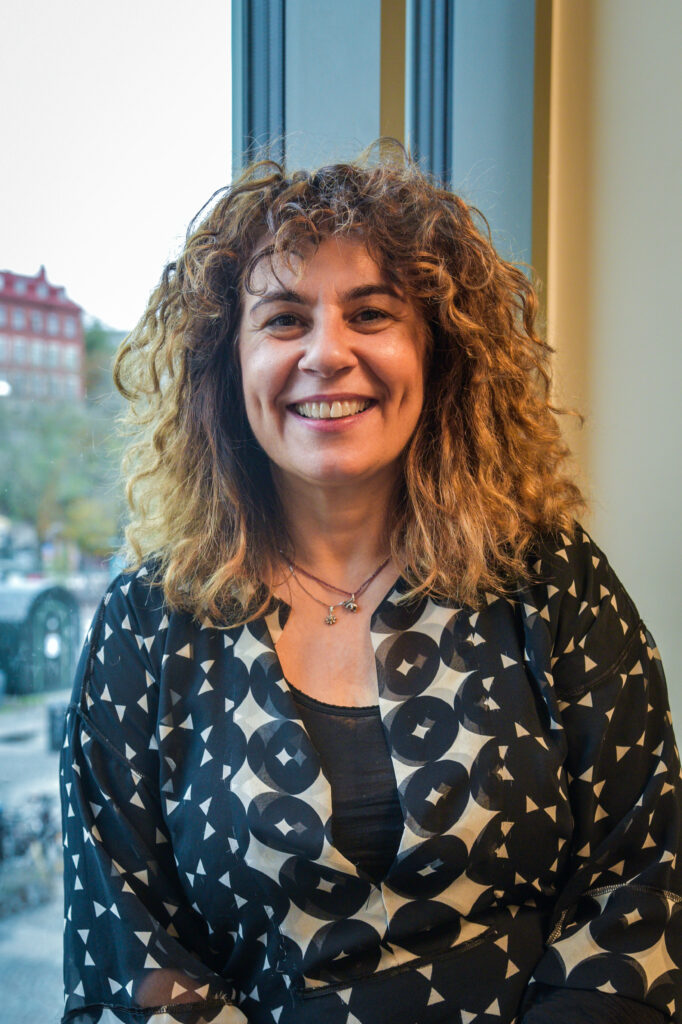
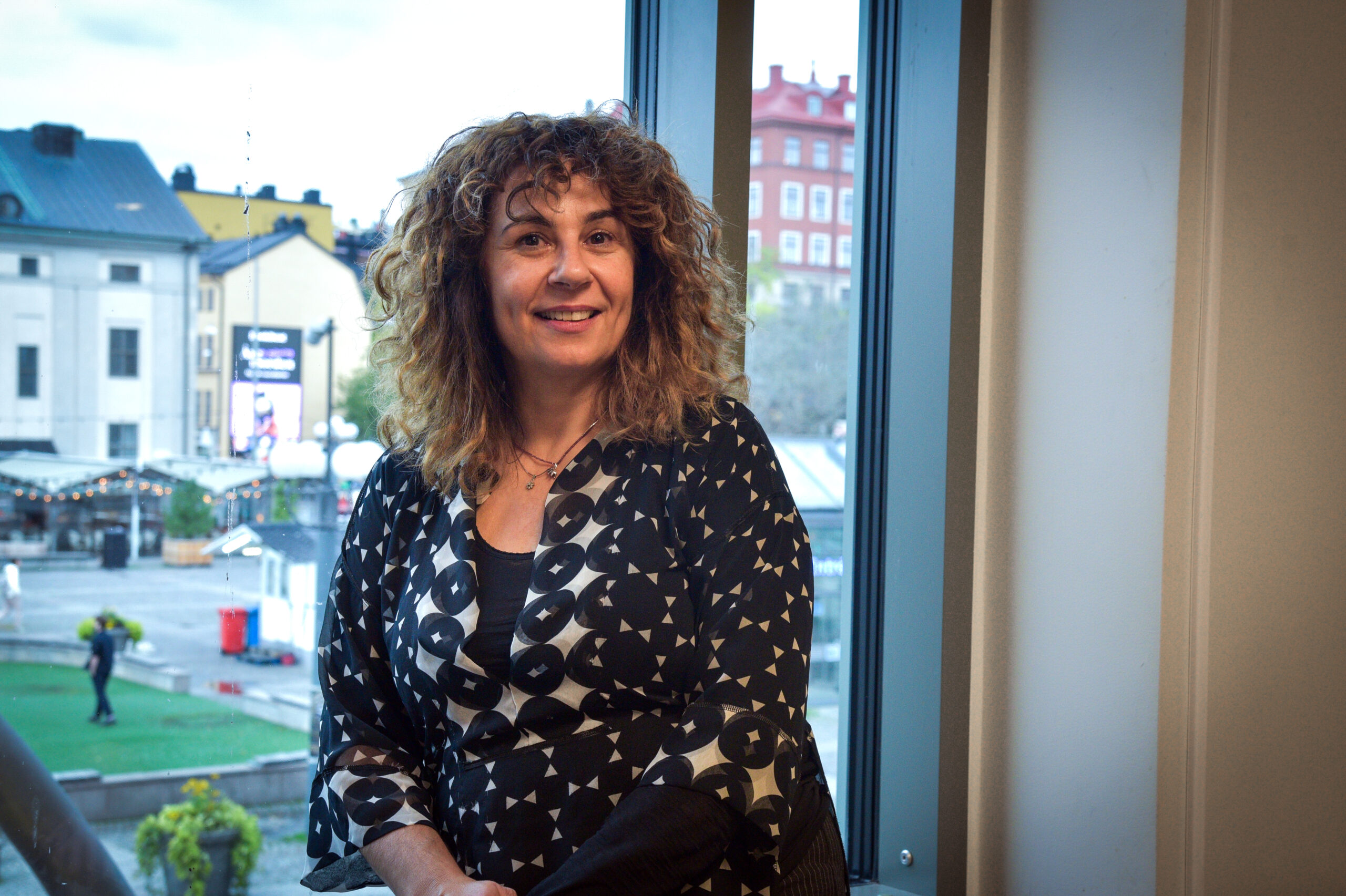
Angeliki Ziaka has spent much of her academic career exploring relations between Christianity and Islam as Professor of the Study of Religions at Aristotle University of Thessaloniki. She currently serves as Programme Executive for Interreligious Dialogue and Cooperation at the World Council of Churches (WCC), a global fellowship of churches promoting peace, justice and cooperation across religious boundaries. She is also Adjunct Professor of Interreligious Dialogue at the Ecumenical Institute at Bossey.
Her work brings her into contact with religious communities across the world, each facing different challenges and opportunities. During a visit to Sweden, we spoke with her about polarization, the role of religious leaders and why building understanding sometimes begins with asking questions rather than providing answers.
How can interreligious dialogue help reduce polarization in Europe?
Interreligious dialogue can create spaces where we listen to the many different voices within religious communities. The important thing is that we do not speak on behalf of others, but allow people to speak for themselves.
I believe this is one of the most effective ways to confront discrimination and racism. When people can express their own experiences and perspectives, there is less room for prejudice and assumptions based on fear or ideological agendas.
When people feel safe expressing their religious identities in society, they become visible and can participate fully. This also contributes to democracy. Democracy means being heard, having an equal place in society and sharing responsibilities. In this sense, interreligious engagement is not only an academic exercise or a matter of relationships between religions and religious representatives. It is also about relationships among people as citizens, regardless of their religious beliefs, non-religious convictions or backgrounds. It is therefore also a democratic practice.
How does the World Council of Churches connect local experiences of interreligious dialogue across different parts of the world?
One of our main aims is to make local expertise visible internationally and to connect churches and religious communities working with interreligious dialogue in different contexts.
Through my role at the WCC, I have the opportunity to engage and collaborate with churches and religious communities in different parts of the world. I have visited India, I am here in Sweden, and I will travel to Bangladesh, among many other places where I engage with diverse religious communities. The realities and challenges are different, but there is much that communities can learn from one another.
Sweden, for example, has a long history of interreligious work, particularly through the Church of Sweden. Over the decades, this experience has developed into something shared with other religious communities, creating a common interfaith space that can contribute positively to society.
This is an important example for churches in other countries that may not have the same resources or opportunities, or that face political and other obstacles to engaging in interreligious dialogue.
The experience developed in Sweden can inspire other churches, not necessarily by being copied directly, but by being adapted to their own circumstances. By connecting these different local realities, we can create networks where communities support and learn from one another.
Your research has extensively explored the historical relationship between Christianity and Islam. Drawing on this experience, how do you think we can strengthen relations between Christians and Muslims today?
First of all, we need to learn about one another. This is an ongoing process. Even if some of us have studied Christianity or Islam, it does not necessarily mean that society has a good understanding of these traditions. The same applies to people who identify themselves as Christian or Muslim.
We need a basic understanding of other religious traditions, grounded in knowledge that is as objective as possible.
But knowledge alone is not enough. We also need to recognize the opportunities that exist in public spaces where people meet. We should approach one another’s religious identities with curiosity rather than fear.
We should be happy to live in societies where people from different religious and cultural backgrounds are part of our everyday lives. This diversity brings another kind of beauty to life.
Sweden has an important legacy in this regard. Nathan Söderblom, the Swedish archbishop and scholar of religion, was among those who recognized the importance of understanding other religious traditions. This is a legacy that the Church of Sweden continues to build upon.
Why are local initiatives so important in interreligious work?
Because local initiatives are the real initiatives. We can speak about interreligious dialogue theoretically, as we are doing now, but the reality of dialogue exists in everyday local practice.
When people know one another, recognize the importance of their neighbours and understand the value of diversity, they are also better equipped to respond critically to political or ideological messages that oppose religious and other forms of diversity.
These relationships become especially important when tensions or violence arise in society.
If religious communities have already established relationships, they can support and protect one another. When people are distant from each other, it becomes much more difficult to offer that protection when conflict emerges.
This is why local interreligious work matters so much. It creates relationships that can become a source of mutual support when they are needed most. International organizations can contribute to strengthening these efforts by connecting local experiences, making them visible, creating pathways for mutual learning, and bringing local perspectives into broader international discussions and policy processes.
How can we build dialogue when we strongly disagree?
The first question is: what exactly do we disagree about?
Is the disagreement political, religious or theological? Is there a nationalist fear behind it? Before entering into dialogue, we need to understand where the disagreement comes from.
Coming from Greece, I often think about the Socratic method. It takes time, but it can be a very valuable approach.
Instead of immediately responding to someone or trying to convince them that they are wrong, you begin by asking questions. Through these questions, the other person may start to reflect critically on their own assumptions.
This is particularly relevant in academic settings, where students sometimes arrive with preconceived ideas about religion or society.
Rather than simply correcting them, we can ask questions that help them examine how their views have been formed.
It is not the only approach to dialogue, but it can be a very constructive one.
What role can religious leaders play in times of conflict?
Religious leaders can play a very important role, both positively and negatively.
When religious leaders become closely associated with certain political agendas, they can contribute to division. They can also reinforce stereotypes when they understand other religious traditions only through the perspective of their own religion, without engaging with the realities of other communities.
But there are also many religious leaders who are deeply committed to working for humanity and peace.
Their role can be especially important in societies where religious authorities have considerable influence. They can help their communities move towards greater understanding and dialogue.
At the same time, different religious communities are organized in different ways. Some are more hierarchical, while others are organized from the grassroots. We therefore need different approaches to encourage interreligious understanding.
Ultimately, understanding means that people can stand alongside one another without fear and recognize what they can share and learn from their differences.
Finally, what message would you like to share during your visit to Sweden?
Working for peace is an endless process.
The Church of Sweden, other churches, interreligious partners and religious communities must continue working for peace. It is something we need so much in the world today.
They should also be proud of the work they have done, without fear.
We are living through difficult times, with many complex and sometimes chaotic situations and conflicting interpretations that often deepen divisions. But those committed to dialogue and peace share a common responsibility to continue their efforts, to listen to one another, and to promote mutual understanding, respect, and harmonious coexistence, even when differences remain.
Bon courage — keep going.